Category Archives: Geen categorie

Maarten Moerman

Maarten Moerman is a Dutch technology specialist, entrepreneur and collector whose career has largely revolved around software, the Internet and network infrastructure, alongside longstanding interests in photography, classic cars and motorcycles, engineering and restoration.

He began his professional career as a programmer in the 1990s, at a time when the Internet was only beginning to become commercially established in the Netherlands. His first company was Agrotel, an agricultural information service whose technological roots went back to the pre-Web era.

Agrotel distributed information through Videotex, or VTX, an interactive electronic information system that allowed users to retrieve pages of information long before websites became commonplace. As the World Wide Web began to replace systems such as Videotex, Moerman worked on automating the transition, developing software that could take information from the existing VTX environment and make it available on the Internet.

It was an early introduction not only to programming for the Web, but to the infrastructure required to make Internet services work. Hosting an online service at the time often meant building much of the environment around it as well. Moerman became involved with servers, connectivity and the construction of an early ISP environment, and his interests gradually shifted from the software running on the Internet towards the networks underneath it.

He later joined Solcon, one of the early independent Internet service providers in the Netherlands. Working for an ISP put networking and Internet infrastructure at the centre of his professional work, and network engineering became his main technical field.

That eventually took him to eBay, where he worked as a Senior Network Engineer and later became Manager of Network Engineering at eBay Classifieds Group. There he worked on the network and data-centre infrastructure supporting a number of international online marketplaces.

The work covered large IP networks, BGP, MPLS, L3VPNs, data-centre networking and the increasing automation and virtualisation of infrastructure. A Juniper Networks case study from this period identifies Moerman as Manager of Network Engineering and describes eBay Classifieds Group’s move towards software-defined networking, combining its existing MP-BGP and L3VPN architecture with Juniper Contrail and QFX data-centre switching.

During the same period, Moerman became involved with Observium, the network-monitoring platform. Through his work at eBay and Marktplaats.nl, he sponsored development of the project and commissioned the implementation of its original alerting system, extending Observium from network discovery and monitoring into active infrastructure alerting. He also contributed documentation and practical monitoring examples to the project and remained involved with Observium and related tooling in later years.
Outside work, cars had been a longstanding interest, particularly older Audis and the five-cylinder quattro models of the 1980s.

By the early 2000s Moerman was active in Dutch and international Audi communities including Audiforum.nl, AudiWorld, S2Forum, MotorGeek and Classic-Audi. His involvement with Audiforum.nl went beyond posting about cars: he was also involved in running the forum’s technical hosting and infrastructure.

His own cars over the years included a number of Audis, among them a TT 1.8T quattro and several older Type 81/85 models. Much of his interest centred on the engineering of the early quattro cars and the interchangeability and differences between the various models.

During this period he also helped his friend Jeffry with the construction of a Sport quattro. The project ran for several years and involved finding original and difficult-to-source parts, working on the car and researching the mechanical differences between the Coupe quattro, Ur-quattro and Sport quattro. The project appears extensively in the Audi forums of the period and eventually reached the road and dyno.

Moerman’s interest in automotive history extended beyond his own cars. Among the subjects he researched was Petermax Müller, the German engineer and racing driver known for his Volkswagen-based competition cars. He collected historical information and photographs and shared material with other enthusiasts online.

Classic BMW motorcycles became another interest during the following years. Moerman restored and built several older BMWs, with projects documented on Motor-Forum.nl and ADVrider. The work ranged from restoration of early single-cylinder machines to later boxer-based projects and involved both mechanical restoration and fabrication.

Photography developed alongside these interests and gradually became a larger part of his life, particularly analogue cameras and older photographic lenses.

Around 2016, another restoration project began on a rather different scale.

Moerman bought a former drinking-water pumping station in Elburg, which had become redundant and was being sold by Vitens. He subsequently converted the building into his home.

The history of the building could be traced back to the immediate post-war period. It was designed in 1948 as the Pompstation te Elburg for N.V. Waterleiding Maatschappij Gelderland (WMG), Doetinchem.

Its architect was Cornelis Nap of Arnhem, with G. van Ede named on the original plans as his medewerker. Van Ede later became Nap’s partner in the architectural practice Corn. Nap en G.J.P. van Ede, which was responsible for a range of buildings during the post-war reconstruction period.

Although designed as a functional waterworks building, the pumping station received a considered architectural treatment and a number of details that remain visible today. Before its conversion, its cultural-historical value was assessed, and in 2016 the municipality agreed to changing the site’s use from a water-company/business function to residential use.

A few years after acquiring the building, Moerman began looking for more information about its architect. He eventually traced the successor to the architectural practice that had inherited the old Nap and Van Ede archive.

The small architectural office was clearing out its historical records at around the time he contacted them. Among the material that had survived were the original architectural drawings for the Elburg pumping station, dating from 1948.

Moerman was able to retrieve them and bring them back to the building for which they had originally been drawn, some seventy years earlier. The drawings are now kept in the former pumping station.

Meanwhile, his interest in photography had developed into Camera Obscura Elburg, a specialist business dealing in analogue rangefinder cameras, vintage lenses and collectible photographic equipment.

Leica forms an important part of the business, but Moerman’s interests range considerably wider. Camera Obscura deals in equipment from manufacturers such as Leica, Zeiss, Nikon and Canon as well as less common optics from companies including Zunow, Schneider, Rodenstock, Steinheil, Angénieux, Kinoptik, Dallmeyer, Hugo Meyer and others.

The business combines trading with research into photographic and optical history. Rare lenses can be poorly documented, and identifying them often involves comparing serial numbers, production changes, catalogues, patents and surviving examples.

That research also led to an interest in making older optics usable on Leica M cameras. Some lenses have optical characteristics worth preserving but were originally built for cameras or systems that are no longer practical to use. Converting them properly to Leica M can require entirely new mechanical components, including focusing mechanisms and accurately designed rangefinder cams.

Moerman began developing and commissioning new housings and components for such projects, combining vintage optics with newly manufactured mechanics.

In 2024 he introduced a newly manufactured rewind lever for Leica M film cameras, developed as a replacement for an accessory that had become increasingly difficult to obtain. CNC machined and produced in several finishes, it was designed for cameras including the Leica M2, M3, MP and M-A.

More extensive projects followed, including the Helios-M 58mm f/2, produced as a limited series in collaboration with RuhrlensWorx. The lens retains the optical system of the Helios 44-2 but places it inside a newly designed Leica M mechanism with rangefinder coupling, click-stop aperture operation and closer focusing.

Camera Obscura has since become a second professional activity alongside Moerman’s work in technology.

He continues to work with modern Internet and infrastructure technology, more recently in association with BetterBe, where his work has included networks, data centres, BGP, DNS, cloud infrastructure, Kubernetes and automation.

Programming has remained part of that work as well. One example is Sonnar, an inventory and invoicing system originally developed for Camera Obscura to deal with the particular requirements of trading second-hand equipment, including stock, trade-ins and margin-tax goods.

More than twenty-five years after starting as a programmer at Agrotel, Moerman’s work therefore still spans software and infrastructure, although on a very different scale from the early Internet.

Alongside it, the interests in older technology have remained. Cars and motorcycles, the former pumping station in Elburg, analogue cameras and vintage lenses all involve objects from different periods and on very different scales, but with a shared appeal: they were designed to be understood, maintained and used.

That has remained a fairly consistent part of Moerman’s interests. Whether working on Internet infrastructure, an old Audi, a BMW motorcycle, a post-war building or a mechanical camera, he has generally preferred to understand what is happening underneath the surface rather than treating technology as a black box.

Today he divides much of his professional time between IT infrastructure and Camera Obscura Elburg, while continuing to work on photographic projects, research older optical equipment and develop new mechanical solutions for cameras and lenses that in many cases have already been in use for half a century or more.

How to take Polaroid 8×10 large format photos

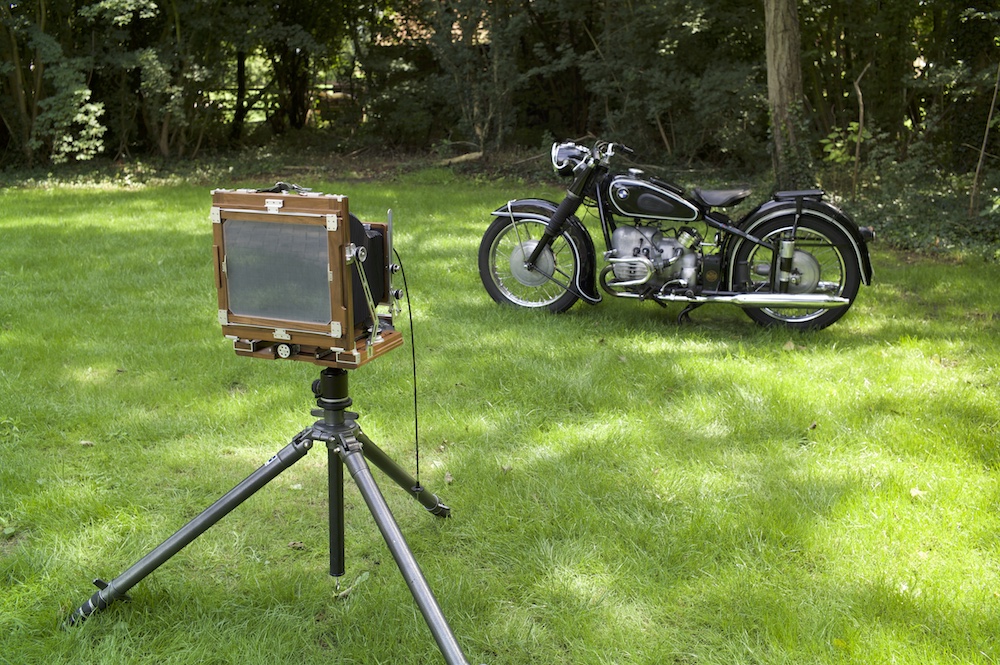
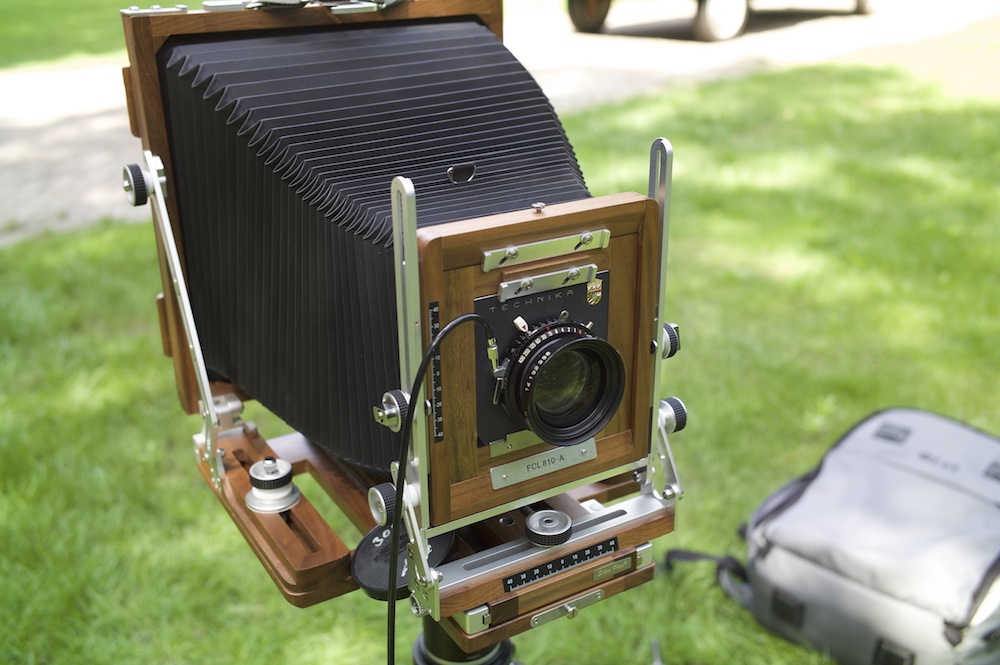
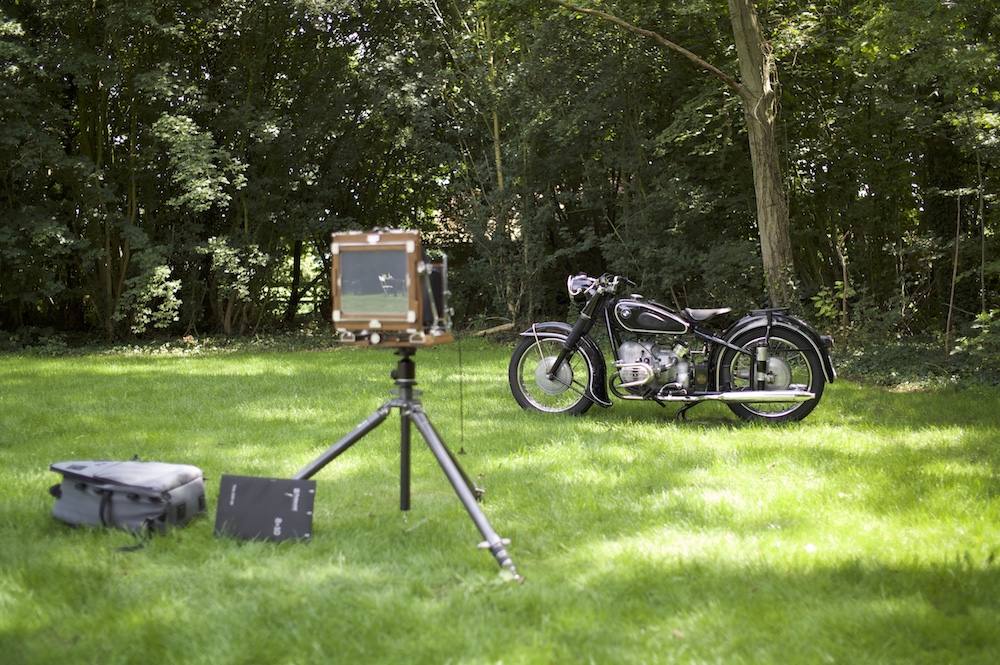
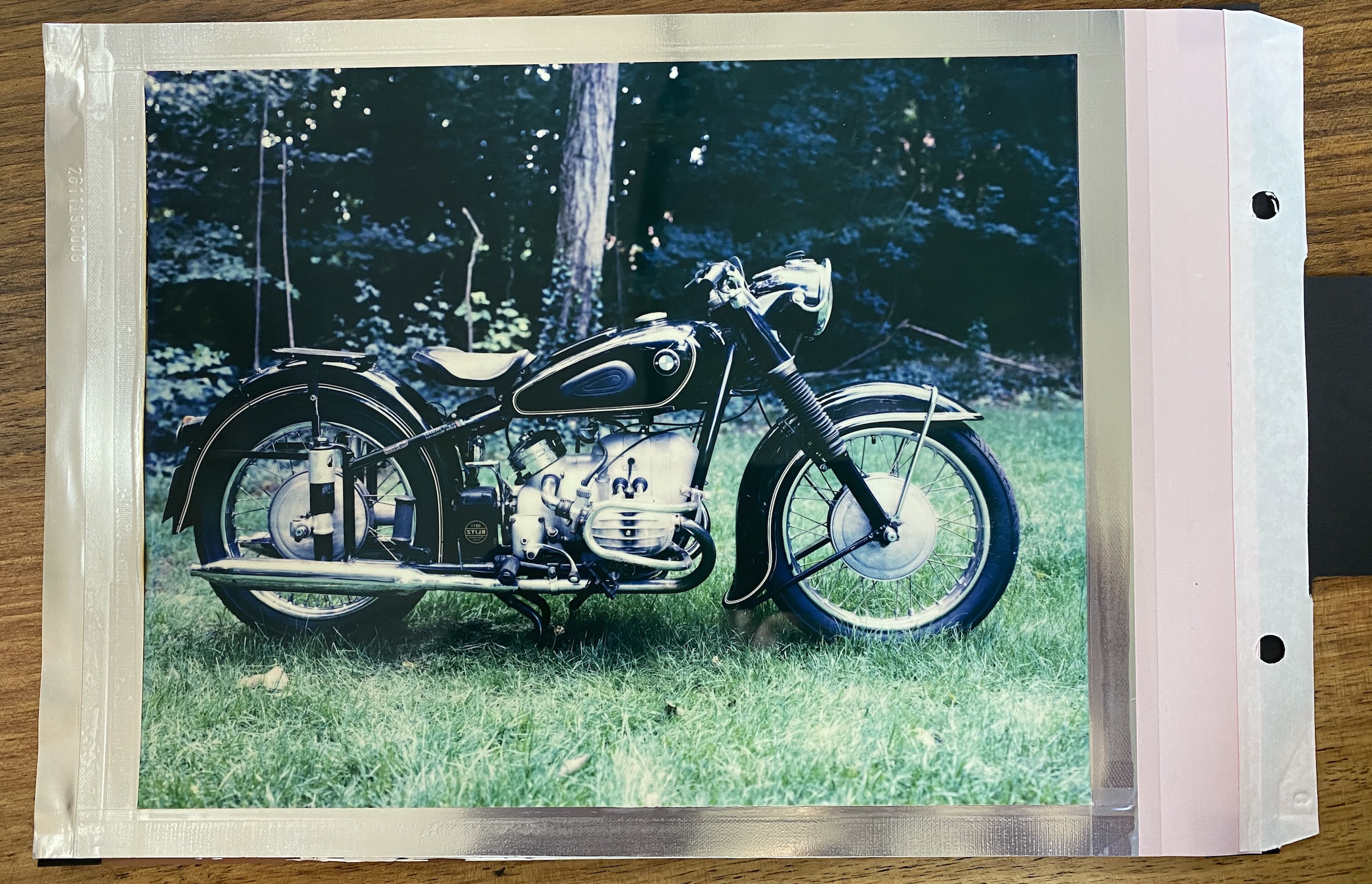
I bought a pack of Polaroid Impossible project to experiment with on a large format (8×10) camera. I used the Schneider Kreuznach G-Claron f9/305mm lens for taking this picture. The film was a 2019 stock, to be specific C008. The subject is a BMW R51/3 from 1953.

Shooting Polaroid 8×10 is a delicate process. For future reference, I created this manual/tutorial mostly for myself to go back to if I shoot it again, as there are many steps involved, and you don’t want to make mistakes with photo’s that cost 18 euro each.

Keep in mind that the environment/subject you are shooting needs to be as contrast free as possible, as Polaroid does not like too much contrast. The dynamic range is limited to around 3 stops. For reading the light I used the great and free Lux app on the iPhone. When metering, meter the whole scene if you want an even exposure across the image, if you would measure the light on say the chrome of the motorcycle, the blacks and shadows would not have any detail in the picture.

Polaroid 8×10 of BMW R51/3 – ISO640 / f16 / 1/15second

Prerequisites to taking a Polaroid 8×10 photo:

  • Make sure your film is out of the fridge at least 1 hour before making the picture
  • Polaroid film must be at correct temperature (advisable 17-23c)
  • Have a box of alcohol wipes ready
  • Ensure scene has not too much contrast
  • Setup the Polaroid processor in advance
  • Make sure the rollers of your processor are clean!
  • Have your light-meter ready
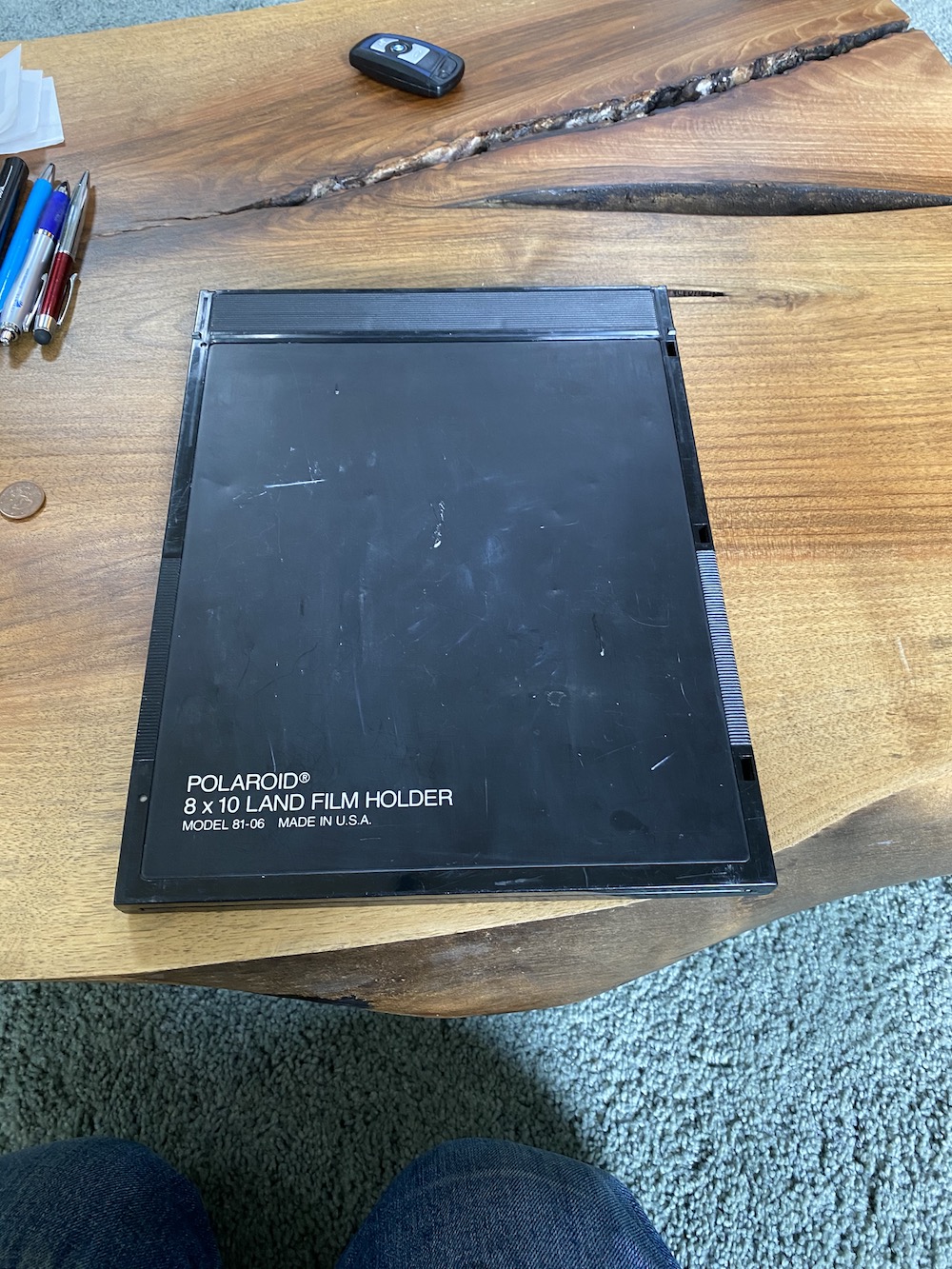
  • This tutorial assumes using a 81-06 film holder

1. Set up the subject to photograph

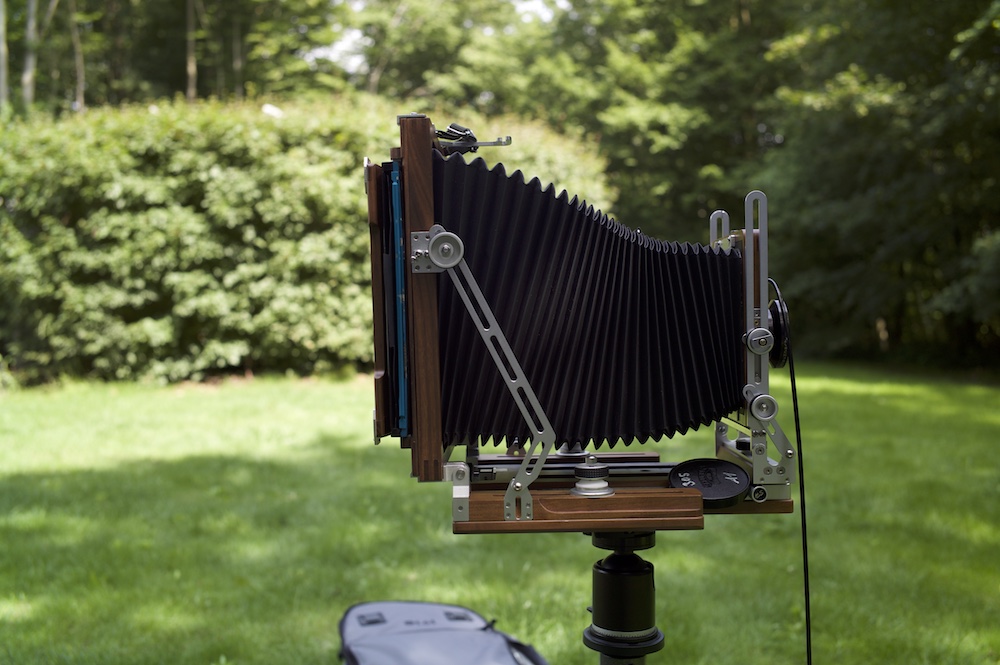
2. Set up the camera

  1. Do a light reading – keep in mind, Polaroid 8×10 is iso640 and allows for only +/- 1/3 of a stop, so pick a not so contrasty scene
  2. Setup the camera how you normally do

3. Setting up the film

  1. Ensure your film holder is clean and free from dust (alcohol wipes)
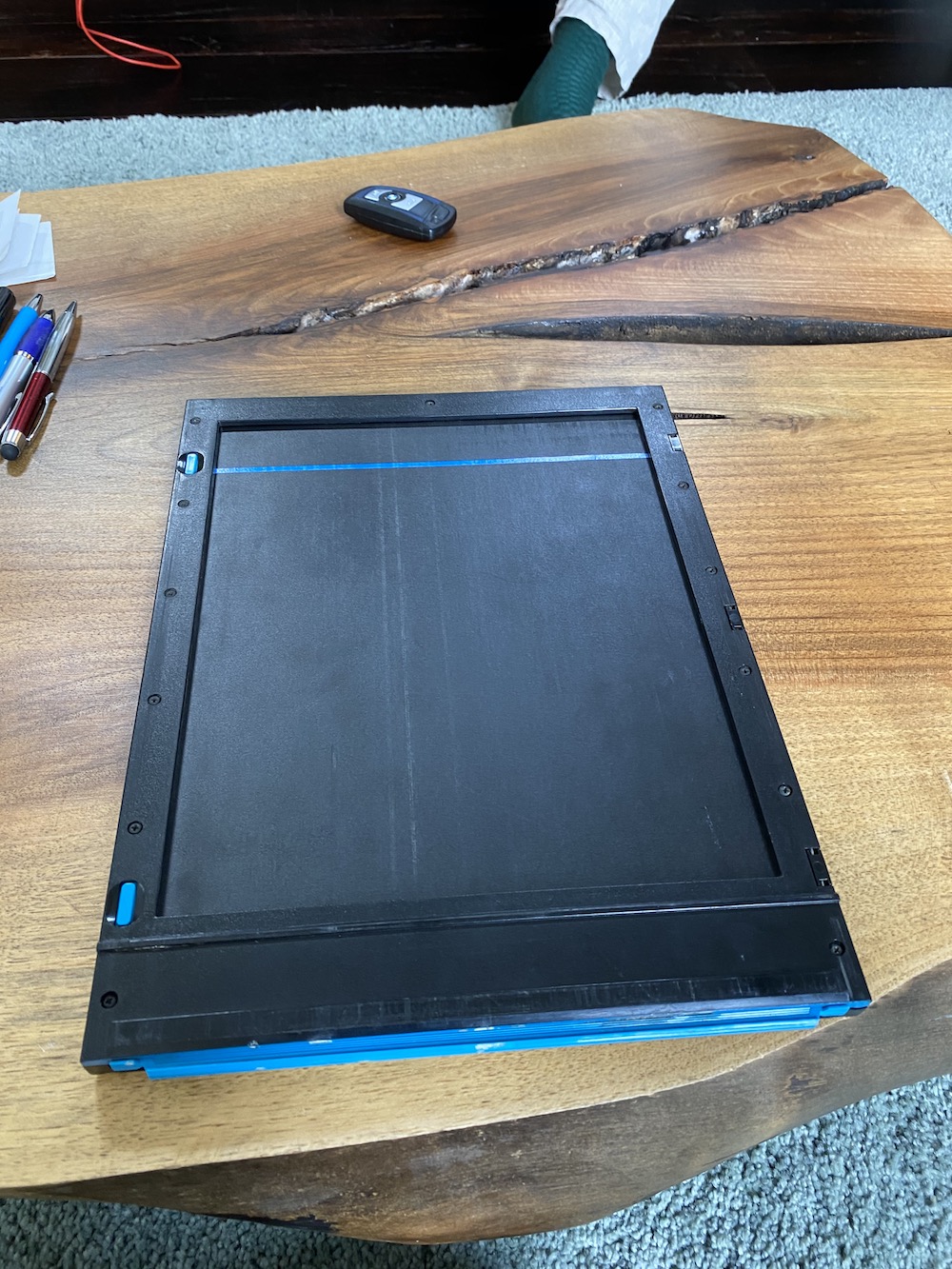
  2. Ensure your film holder has the dark slide inserted correctly (blue line facing away from the lens)
  3. Open up your film box, and take 1 envelop with a negative from the pack of sheets
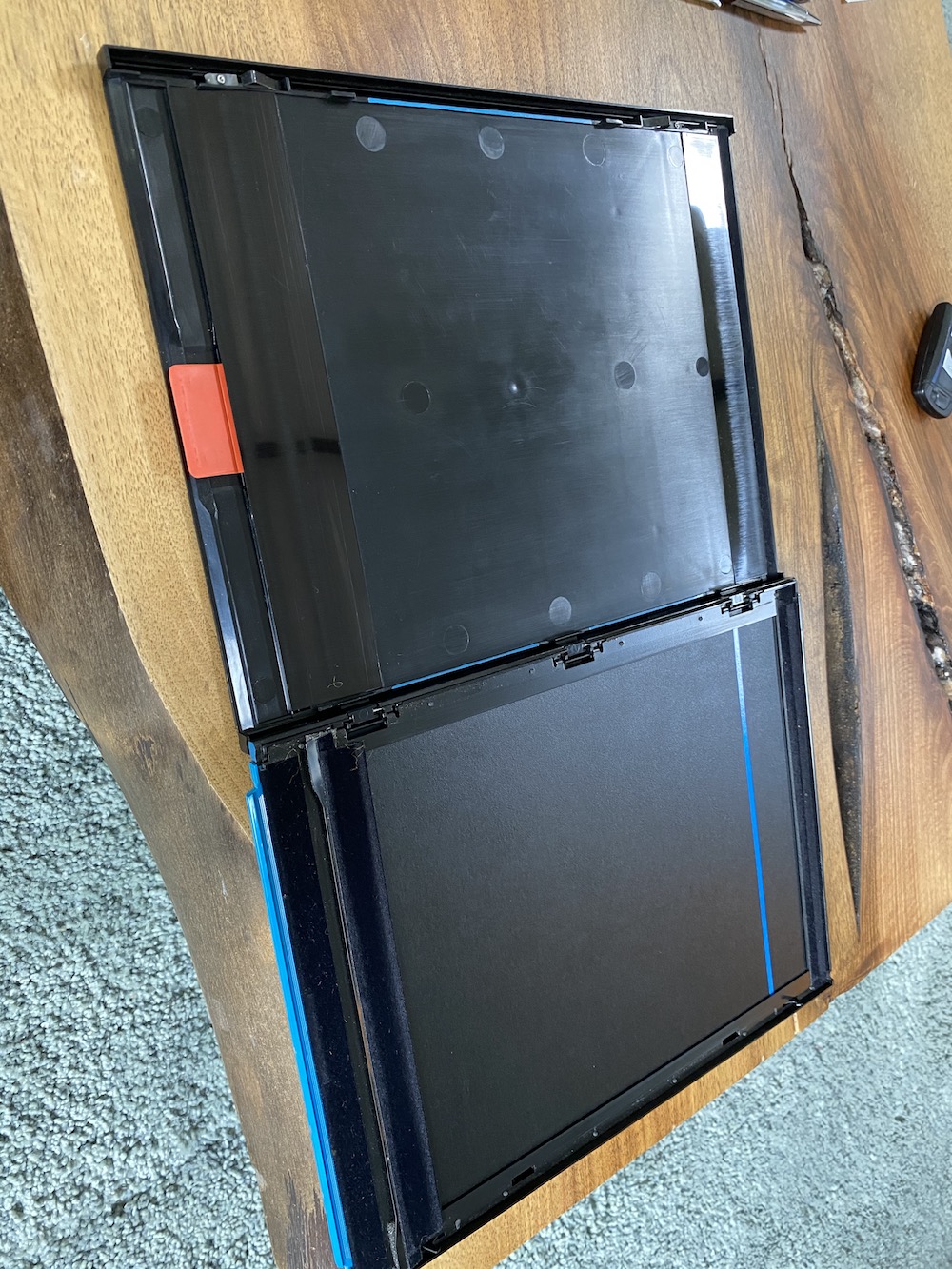
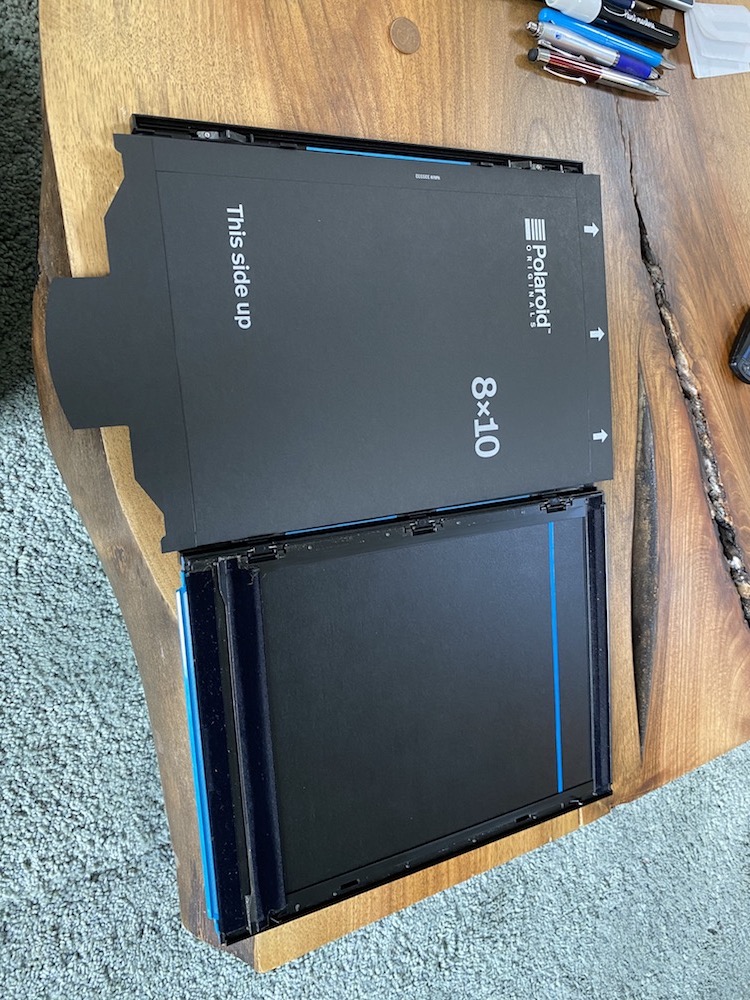
  4. Open the film holder
  5. Put the negative envelope in the part that has the red lip
  6. Lay film envelop on the opened Polaroid holder as per picture
  7. Ensure that the red tab engages with the film envelop and breaks the seal
  8. Close the film holder
  9. You now have a prepared film hold with a Polaroid negative in it


4. Taking the picture

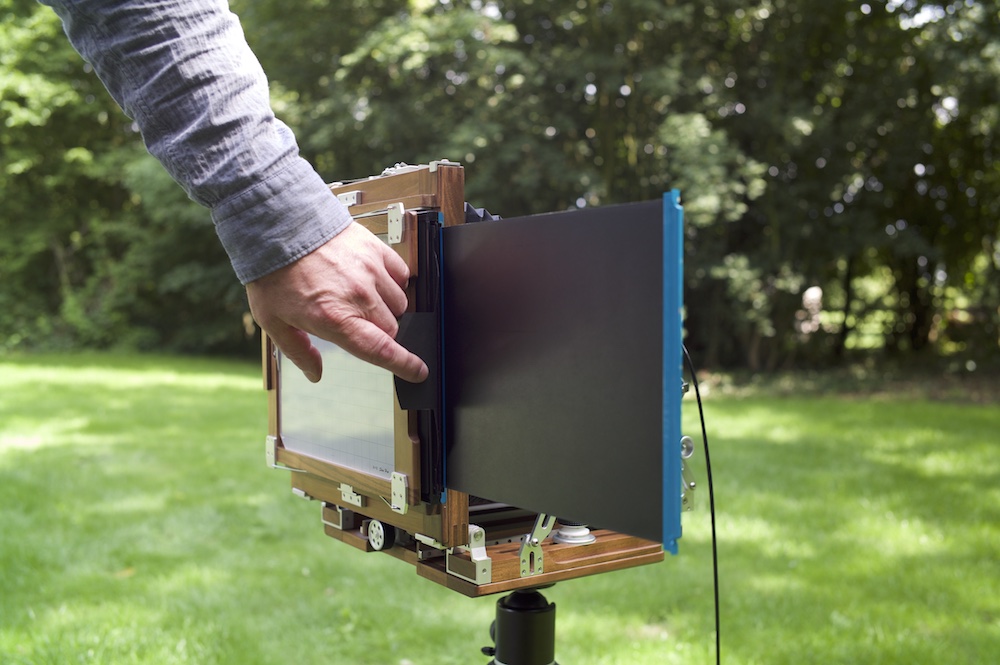
  1. Remove the envelope holding the negative while the envelope is in the holder, needs 2 hands
  2. Insert the film holder in the camera
  3. Double check your camera settings (lens closed, aperture & shutter speed set correctly)
  4. Do a final check of firing the shutter
  5. Cock the shutter
  6. Slide out the dark slide until the blue line becomes visible
  7. Do not fully remove the dark slide
  8. Take the picture
  9. Slide back in the dark slide
  10. Take the film holder from the camera
  11. You are done taking the picture


5. Processing the picture

  1. Take a positive sheet out of the Polaroid box while making sure you don’t touch the transparent part
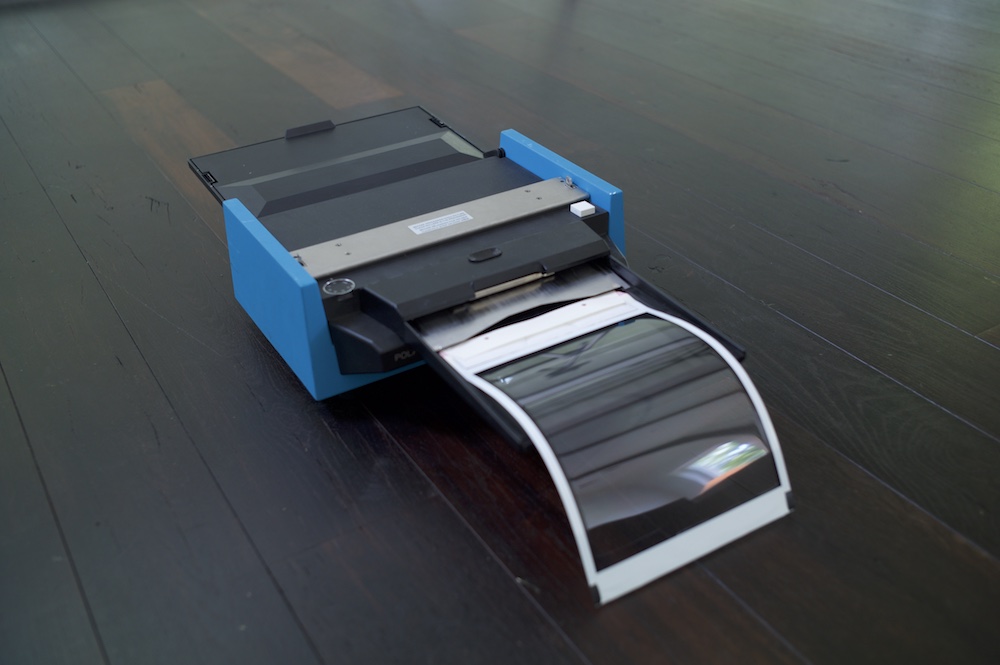
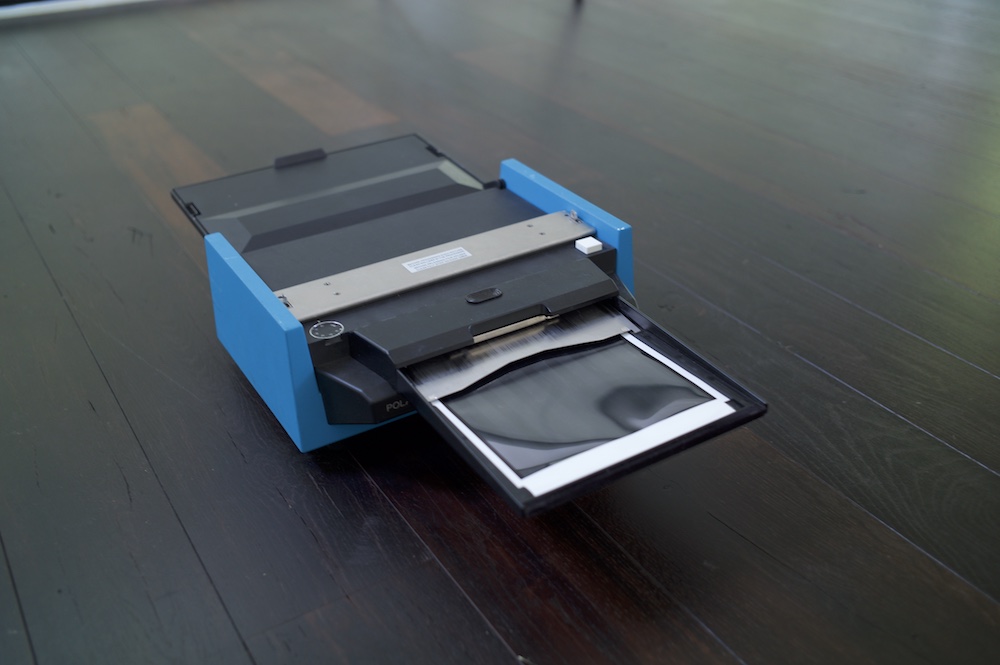
  2. Put the positive sheet in the processor, with the chemical packs going in first and facing up under the metal part(see picture). White framing is facing up, silver framing is facing down
  3. Make sure the sheet is properly seated
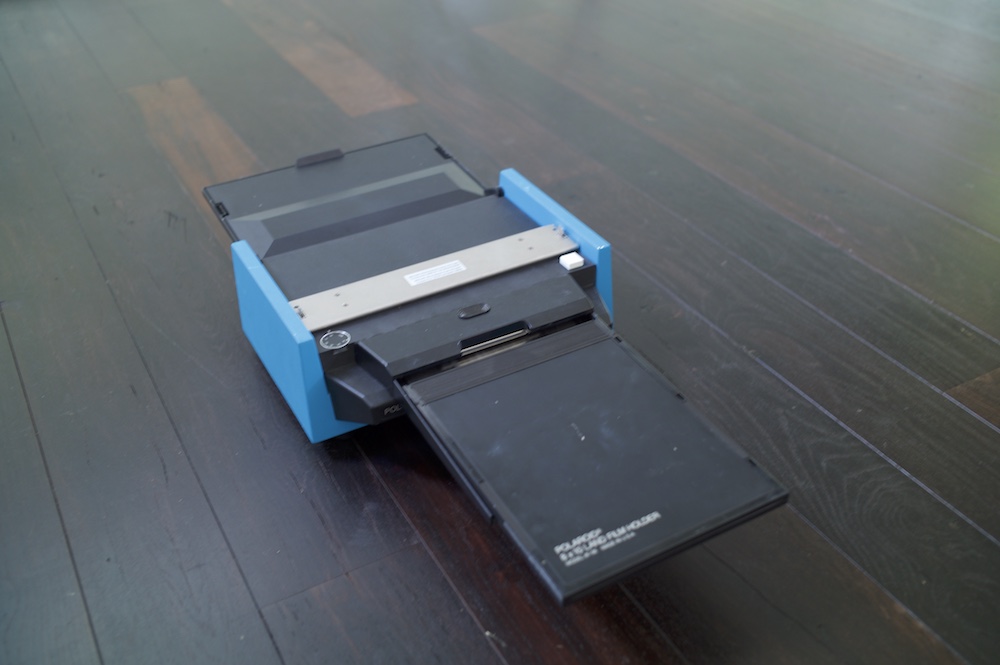
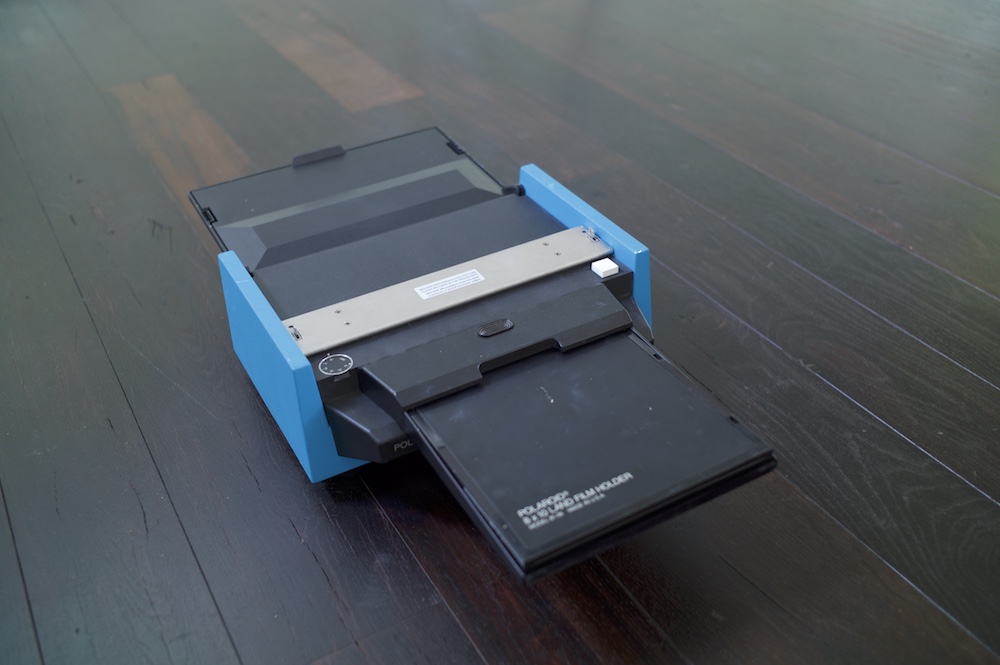
  4. Insert the film holder on top of this, and slide it in, having the “Polaroid 8×10 film holder” text facing up
  5. Make sure the film holder is properly seated
  6. Double check if the rollers are properly clean and locked in place
  7. Make sure the tray where the combined positive & negative sheet end up is closed
  8. Press the white button 
  9. Wait 15 minutes for the film to develop
  10. You now have a Polaroid 8×10 image


Small review on the 75mm f1.25 7Artisans lens in Leica M mount

This is the second 7artisans lens I own now, the first one I own is the 35mm F2 in M mount.

I was surprised by that 35mm lens, and my intent is now to own all of their M mount lenses, since I can interchange them between both my Leica M6 & my Sony A7 mk1.

I received my copy of the lens on the 16th of August, which i consider pretty quick shipping/customs, as I bought it directly in 7Artisans eBay shop a week earlier (the day it became available).

Now since this is my first ever piece of text i write about a lens, don’t expect this to be the best review ever about a lens 🙂

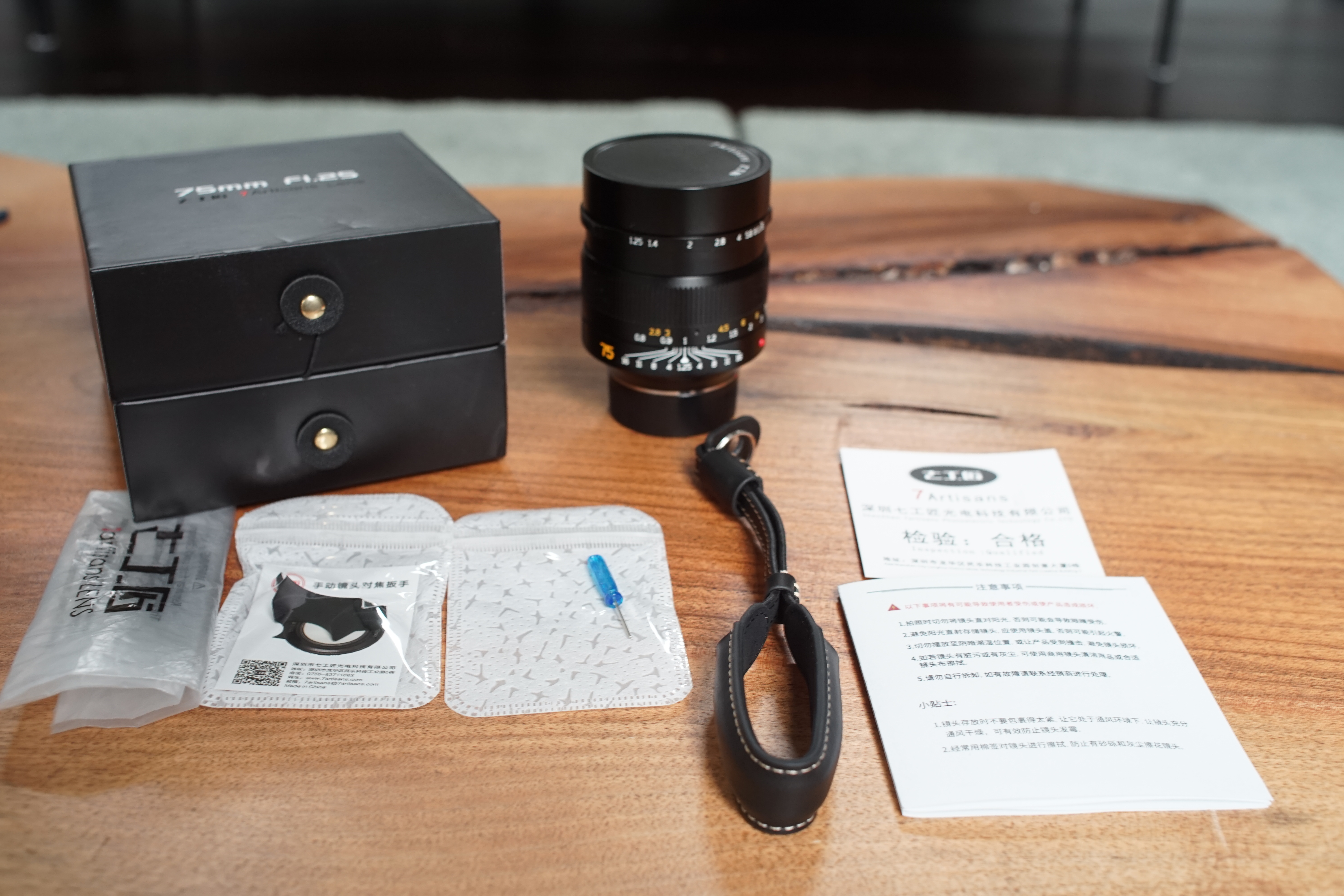
First up, opening up the package.

The lens came well packed, the style of the box is different from their previous ones, I quite like it.

Contents of the package:

  • lens
  • manual
  • adjustment tool
  • focus tab (to be mounted seperately)
  • wrist strip for your camera
  • soft bag (forgot to include in the picture)
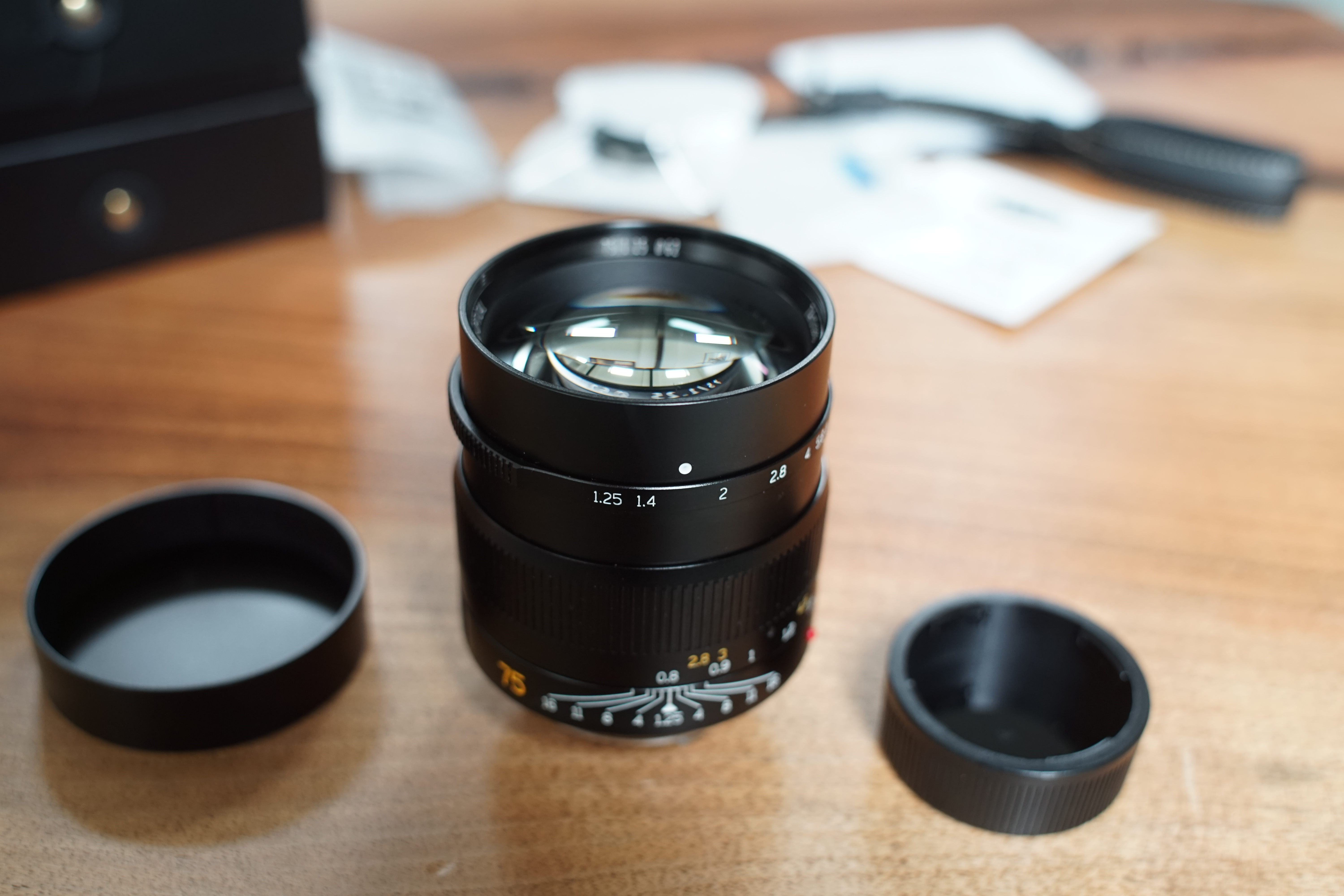
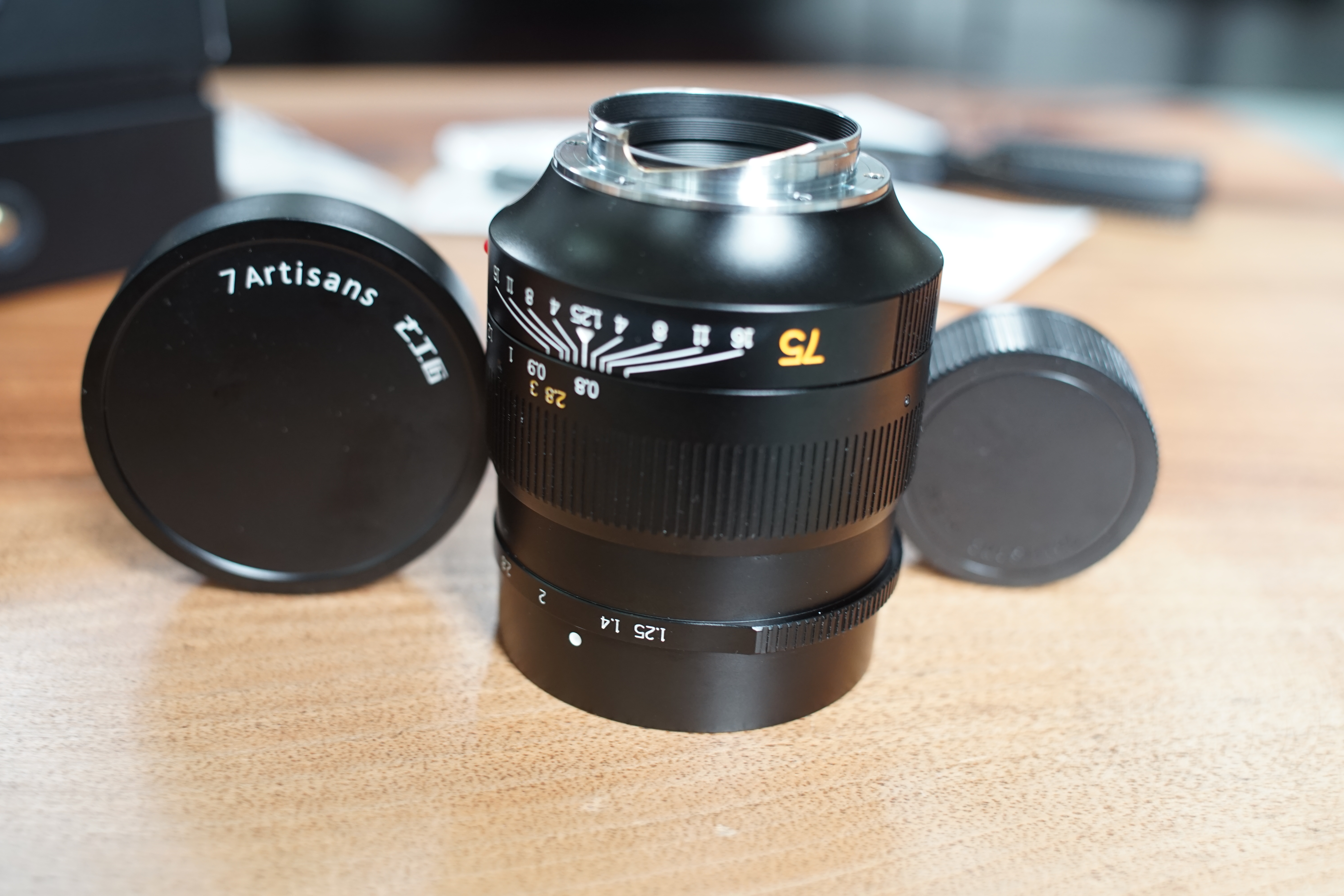
7Artisans 75mm f1.25 M mount

What I am wondering is if the lens is pre-calibrated for Leica M rangefinder cameras. My previous 35mm came with a calibration chart. This one doesn’t. I guess I will quickly find out after running a roll of film through it.

Build Quality

Removed the lens from it’s plastic, and turned some aperture and focus rings. Everything feels very solid. There is no lateral movement on both aperture & focus rings. All the protection caps sit really snug on the lens. The front cap has some felt in it. Aperture rings feels smooth rotating it. The focus ring makes a bit of a grinding noise when you’re near infinity, well grinding is a big word, but you can hear it’s not as smooth as when in the close focus area of the ring movement. EDIT: This has now completely disappeared after using the lens for a an hour of 2.

Image quality

Mounted the lens on my Sony A7, and took a few shots. Unfortunately the whole day here in the Netherlands has been overcast, so no nice light in the evening.

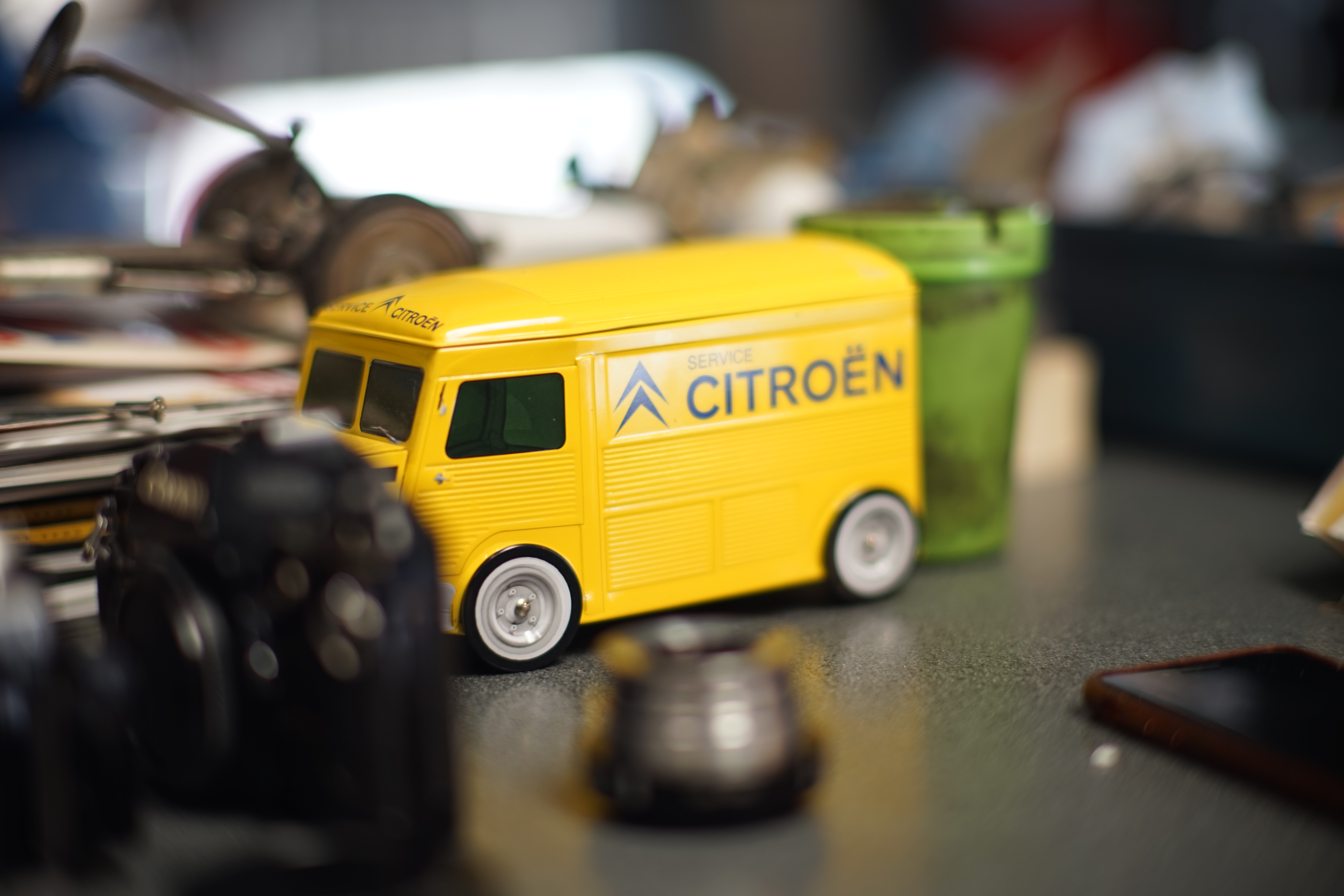
All shots are at f1.25 because why else would you get this lens :).
None of the shots have been processed, straight of the camera, and if you do right-click/view image, you will get the actual 6000*4000 resolution picture. EXIF information will show iso & shutter speed.

I took some inside shots, outside shots and a test range going through all apertures to check the following:

  • differences in aperture for bokeh/sharpness
  • see vignetting
  • if there’s any purple fringing going on

Then in the evening, i took some shots on ISO 640.

Inside shots

I’ll just let the images speak for themselves, all shot @ f1.25

Outside shots

I’ll just let the images speak for themselves, all shot @ f1.25

f1.25 @ iso 100

f1.25 @ iso 100

Aperture range f1.25 – f16

f1.25 @ iso 100

f1.4 @ iso 100

f2 @ iso 100

f2.8 @ iso 100

f4 @ iso 100

f5.6 @ iso 100

f8 @ iso 100

f11 @ iso 100

f16 @ iso 100

My takeaways from taking this lens through it’s apertures:

  • Colours are warm at f1.25 & f1.4, f2 and up they are suddenly cooler
  • Vignetting not that much, and almost completely gone at f2.8
  • purple & green fringing goes away in non focused areas at around f4
  • bokeh sometimes a bit busy at f1.25 , but generally good
  • sharpness off center seems pretty good to me
  • I like this lens

Evening shots

These shots are taken at ISO 640

f1.25 @ iso 640

f1.25 @ iso 640

Conclusion

Now, since I’m not an official lens reviewer, and just thought that it would be nice to write something about this lens, my conclusion is just some ramblings about other lenses and price comparisons.

I like this lens, it’s about 1/23rd of the price of the Leica f1.25 lens, which is probably with regards to image quality in a different stratosphere/insanely better, but for this price, I’m happy I bought the lens. Even though i have never played with that lens, and probably never will.

I’ve also not ever played with the voigtlander 75 f1.5 that just came out, which is about double the price. I’ll let the know lens reviewers on the web take a conclusion on which one is better. I just hope that lens is twice as good as this 🙂